
 i

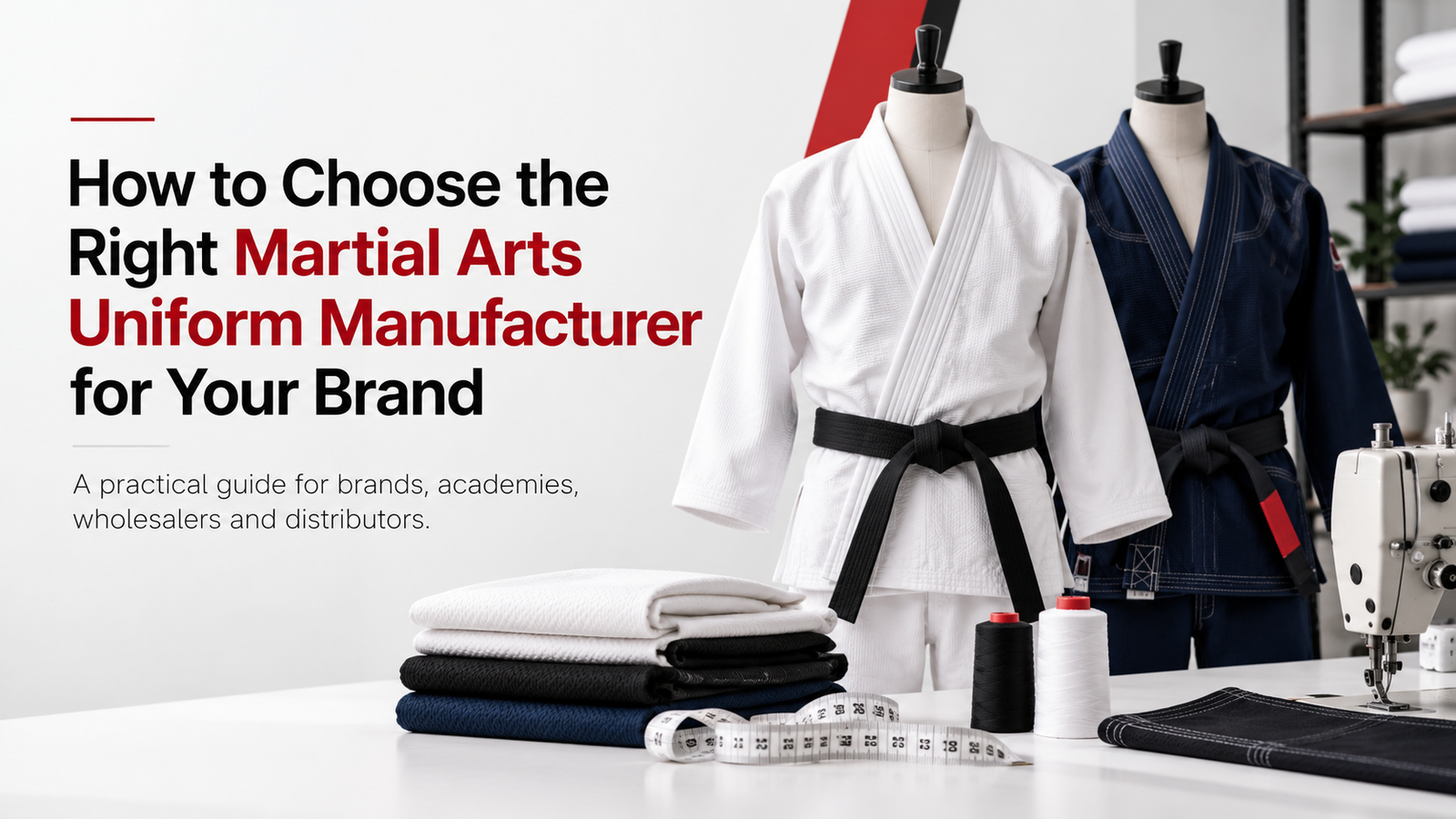
Choosing the right martial arts uniform manufacturer is one of the most important decisions for martial arts brands, academies, distributors, wholesalers, and retailers. Customers expect martial arts uniforms to provide durability, comfort, unrestricted movement, and a professional appearance. Poor-quality uniforms can quickly damage a brand’s reputation, while well-manufactured products can encourage repeat orders and long-term customer loyalty.
At Key Gear, we understand that martial arts apparel is not simply clothing. Every uniform must be designed according to the requirements of the discipline, training environment, and end user. Whether you need Karate uniforms, Judo gis, Brazilian Jiu-Jitsu gis, or Taekwondo uniforms, choosing an experienced manufacturing partner can make a significant difference.
Understand Your Martial Arts Product Requirements
Before selecting a manufacturer, you should clearly define what type of martial arts products you want to produce.
Different martial arts disciplines require different fabrics, constructions, weights, cuts, and reinforcement techniques.
For example, a lightweight Karate gi may prioritize freedom of movement and comfort, while a BJJ gi generally requires stronger fabric and reinforced construction because of constant pulling and grappling.
Common martial arts products include:
- Karate Gis
- Judo Gis
- Brazilian Jiu-Jitsu Gis
- Taekwondo Uniforms
- Martial Arts Belts
- Training Apparel
- Rash Guards
- Fight Shorts
- Academy Uniforms
- Competition Uniforms
A professional manufacturer should understand these differences instead of producing every martial arts uniform using the same construction.
Check Fabric Quality and Weight Options
Fabric selection plays an important role in the performance and durability of martial arts uniforms.
Depending on the product, manufacturers may offer different fabric types, GSM weights, weaves, and compositions.
For martial arts gis, common considerations include cotton content, polyester blends, pearl weave fabrics, canvas materials, and lightweight training fabrics.
Your manufacturer should be able to guide you according to your target customer.
For example, beginner-level academy uniforms may require lightweight and economical materials, while premium competition products may require stronger and more specialized fabrics.
At Key Gear, custom manufacturing allows brands to select materials based on their specific product positioning.
Look for Custom Manufacturing Capabilities
If you are building your own martial arts brand, customization is extremely important.
A strong manufacturing partner should allow you to customize more than just the logo.
Custom options can include:
Fabric Selection: Choose appropriate fabric construction, weight, and composition.
Custom Colors: Develop uniforms according to your brand or academy colors.
Embroidery: Add logos, academy names, symbols, or custom artwork.
Patches: Apply woven, embroidered, printed, or sublimated patches where required.
Sizing: Develop appropriate size ranges for adults, youth, or specific markets.
Labels: Add custom woven labels, care labels, size labels, and brand labels.
Packaging: Use private-label bags, boxes, inserts, hang tags, and other presentation materials.
These services allow you to build a product that genuinely represents your brand rather than selling a generic uniform with a different logo.
Evaluate Stitching and Reinforcement
Martial arts apparel experiences significant physical stress.
Judo and BJJ athletes constantly grab, pull, twist, and stretch each other’s uniforms. Karate and Taekwondo practitioners require flexibility during rapid kicks and movements.
Because of this, construction quality matters.
Check whether the manufacturer uses proper reinforcement at important stress points such as:
- Shoulders
- Underarms
- Side seams
- Crotch areas
- Knee panels
- Lapels
- Sleeve openings
- Trouser seams
Strong stitching and reinforcement help extend product life and improve customer satisfaction.
Private Label Manufacturing Matters
Many martial arts businesses want to develop products under their own brand name.
This is where private label martial arts manufacturing becomes valuable.
Instead of purchasing generic products and reselling them, private-label manufacturing allows you to create products specifically for your company.
Your manufacturer may provide custom:
- Brand labels
- Size labels
- Care labels
- Embroidery
- Patches
- Hang tags
- Product bags
- Retail packaging
- Custom color combinations
This creates a more professional customer experience and helps differentiate your products from competitors.
Ask About Sampling Before Bulk Production
Sampling is an important part of custom manufacturing.
A sample gives you an opportunity to evaluate the product before committing to larger quantities.
During the sampling stage, check:
- Fabric feel
- Fabric weight
- Measurements
- Stitching
- Logo position
- Embroidery quality
- Patch quality
- Color accuracy
- Overall fitting
- Packaging
Providing clear feedback during sampling can significantly reduce problems during production.
Review Sizing and Fit
Sizing can differ considerably between markets.
A martial arts uniform sold in Europe may need different sizing specifications than a product intended for customers in the United States, Middle East, or Asia.
Professional manufacturers should be able to follow your measurement chart or help develop sizing according to your target market.
For growing brands, consistent sizing is especially important because customers expect the same fit whenever they reorder.
Check Bulk Manufacturing Capabilities
Your supplier should be capable of supporting your business as it grows.
You may initially need a relatively small order, but successful products can quickly require larger production quantities.
Ask your manufacturer about:
- Minimum order quantities
- Production capacity
- Bulk-order pricing
- Sampling timelines
- Production lead times
- Repeat-order consistency
- Packaging capabilities
- International shipment preparation
Working with a manufacturer capable of handling both initial orders and larger quantities can simplify long-term growth.
Consider Communication and Production Transparency
Good communication is essential in custom manufacturing.
Your supplier should clearly understand your specifications before production starts.
You should be able to provide information such as:
- Product sketches
- Reference images
- Logo files
- Pantone colors
- Size charts
- Fabric requirements
- Label designs
- Packaging requirements
- Order quantities
Clear communication reduces misunderstandings and helps ensure that the final products match your expectations.